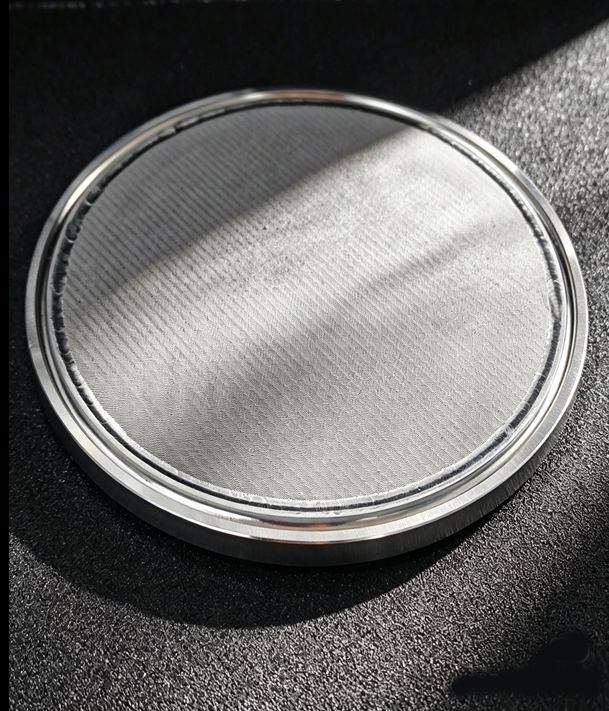
Sintered stainless steel filter discs are made by high-temperature sintering of multiple layers of stainless steel wire mesh into a single piece. Featuring a high-strength, rigid structure similar to metal sponge, they efficiently capture fine contaminants in gases and liquids, serving as core components for industrial precision filtration.
Choosing the Best of The filter disc can greatly boost performance. Focus on these three core criteria:
1.Medium and Filtration Accuracy
First identify the type of liquid or gas to be filtered and the size of impurity particles, then select the appropriate filtration accuracy (μm). For the food and beverage industry, 20–40 μm filter discs are commonly used. High-precision 1–10 μm filter discs are required for pharmaceutical and electronic industries.
2. Operating Conditions
Select materials based on working temperature, pressure and medium corrosiveness. 316L stainless steel is preferred for corrosive environments and sanitary applications. 304 stainless steel is sufficient for general working conditions.
3. Workmanship & Quality
Inspection High-quality filter discs feature smooth, burr-free edges, typically manufactured with laser cutting, argon arc welding and polishing processes. They prevent pipeline scratches and bacterial growth.Request material test reports during procurement. A simple magnet test also works: genuine 316L stainless steel has extremely weak magnetism.